Building a Real-Time Collaboration Platform That Scaled to 50,000 Users: An Engineering Case Study
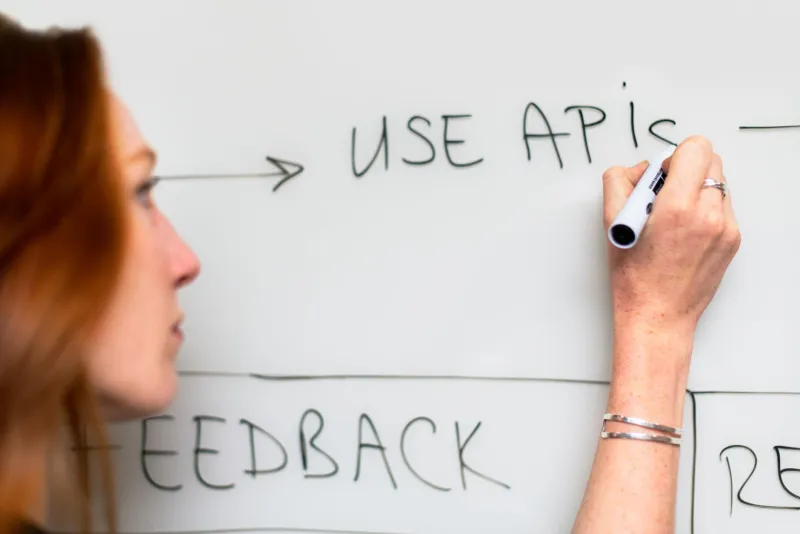
Every significant software project begins the same way: a whiteboard covered in boxes and arrows, a team confident in its assumptions, and a timeline that feels reasonable in the moment. The gap between that whiteboard and a production system serving tens of thousands of users is where genuine engineering happens — and where the most instructive lessons are earned.
This case study documents how SE Projects approached the design and delivery of a real-time collaboration platform, from initial concept through a production environment supporting more than 50,000 concurrent users. The goal here is not to present a polished success story but to offer an honest account of the technical decisions made, the assumptions that failed, and the architectural evolution that followed.
The Initial Architecture: Confidence and Its Limits
The project originated as a document collaboration tool intended for distributed teams — a space where multiple users could edit, annotate, and comment on shared content simultaneously. The early architecture was straightforward: a Node.js application server, a PostgreSQL database, and WebSocket connections managed through Socket.IO. For a proof-of-concept serving a few hundred users, the system performed admirably.
The first architectural assumption — that a single application server could manage WebSocket state across a growing user base — held until it didn't. When the platform entered beta and user counts climbed past 5,000, connection management became the dominant bottleneck. Memory consumption on the application server grew nonlinearly, and connection drops under load created a frustrating user experience that early adopters were quick to report.
The lesson here was not that WebSockets were the wrong choice. They remained the correct protocol for the use case. The lesson was that stateful connections at scale require deliberate horizontal scaling strategies from the outset, not as an afterthought.
Rearchitecting for Horizontal Scale
The team's response was to decouple connection management from application logic. Redis was introduced as a shared pub/sub layer, allowing WebSocket connections to be distributed across multiple application instances without losing message routing fidelity. Each server instance became stateless with respect to user sessions, publishing and subscribing to named channels rather than maintaining in-memory connection maps.
This transition required a meaningful refactor of the event handling layer, but it produced a system that could scale horizontally by simply adding application server instances behind a load balancer. Kubernetes was adopted to manage container orchestration, with horizontal pod autoscaling configured to respond to connection count and CPU utilization metrics.
The infrastructure shift also surfaced a secondary problem: database write contention. As concurrent users increased, the frequency of document state updates overwhelmed the PostgreSQL write capacity. Every keystroke, cursor movement, and annotation triggered a database write — a design that had seemed harmless at low volumes but proved untenable at scale.
Operational Transformation and the Database Problem
Addressing the write contention problem required rethinking how document state was represented and persisted. The team adopted an Operational Transformation (OT) model, wherein individual edits are represented as discrete operations that can be composed, rebased, and applied in order. Rather than writing full document snapshots on every change, the system began persisting operation logs, with periodic snapshots generated asynchronously.
This approach dramatically reduced write frequency and allowed the application to reconstruct document state from operation history when needed. PostgreSQL remained the source of truth for finalized document versions and user data, while a Redis-backed in-memory store handled the high-frequency operation stream during active editing sessions.
The database schema was also revised to partition data by workspace, reducing index contention and enabling more efficient query patterns as the user base grew. Read replicas were introduced for analytics and reporting workloads, isolating those query patterns from the primary write path.
Observability: The Infrastructure Investment That Paid Dividends
One decision made early in the project that consistently proved its value was a commitment to comprehensive observability. The team instrumented the application with distributed tracing via OpenTelemetry, aggregated logs through a centralized platform, and established dashboards tracking connection counts, operation throughput, error rates, and p95 latency across all service boundaries.
When performance regressions occurred — and they did, regularly — the observability stack made root cause analysis a matter of hours rather than days. During one particularly challenging incident involving a memory leak in the operation processing pipeline, distributed traces allowed the engineering team to isolate the problematic code path within a single afternoon, a resolution timeline that would have been impossible without that infrastructure in place.
What the Whiteboard Got Wrong
Looking back at the original architecture diagram, several assumptions stand out as optimistic in ways that cost the project time and rework.
First, the assumption that connection state could be managed in-process was a scaling liability that required significant refactoring to resolve. Second, the decision to write full document snapshots on every change reflected an underestimation of write volume at scale. Third, the initial deployment model — a single application server on a cloud VM — had no clear path to horizontal scaling and required a full infrastructure migration when load demanded it.
None of these were failures of engineering judgment in isolation. They were reasonable starting points for a product at the proof-of-concept stage. The failure, to the extent there was one, was in not revisiting those assumptions aggressively enough as early user data became available.
Outcomes and Continuing Evolution
The platform currently serves more than 50,000 active users across several enterprise clients in the United States. Average WebSocket connection latency sits below 40 milliseconds under normal load, and the system has sustained multiple traffic spikes — including one driven by a product launch that tripled daily active users over 72 hours — without service degradation.
The architecture continues to evolve. The team is currently evaluating a migration from Operational Transformation to a Conflict-free Replicated Data Type (CRDT) model, which offers stronger consistency guarantees in offline and high-latency scenarios. That work is ongoing, and it will generate its own set of lessons worth documenting.
The core takeaway from this project is one that applies broadly to complex software systems: the whiteboard is a starting point, not a contract. The engineering discipline lies in building systems that can absorb change, instrumenting them well enough to understand their behavior, and maintaining the intellectual honesty to revise assumptions when evidence demands it.