Phantom Infrastructure: The Hidden Sprawl Draining Your Cloud Budget
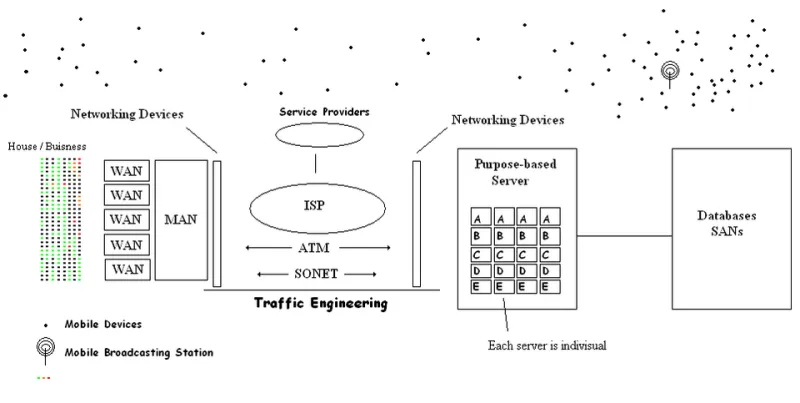
Photo: User:Ramu50, CC BY 3.0, via Wikimedia Commons
Cloud billing surprises have become something of an engineering rite of passage. A team ships a feature, spins up a supporting environment, and moves on. Months later, a finance review surfaces a line item nobody recognizes. By then, the engineer who provisioned it has changed roles, the project it supported has been shelved, and the resource has been quietly accumulating charges for longer than anyone cares to admit.
This pattern is not the result of negligence. It is the predictable outcome of how modern engineering teams operate—under deadline pressure, with distributed ownership, and inside cloud platforms that make provisioning frictionless while making decommissioning an afterthought.
Understanding why infrastructure graveyards form is the first step toward preventing the next one.
How Sprawl Accumulates Without Anyone Noticing
The most expensive unused infrastructure is rarely the result of a single bad decision. It is the compounded residue of dozens of reasonable ones.
A staging environment gets cloned for a client demo. The demo concludes, the deal closes or falls through, and the environment persists because no one has explicit authority to delete it. A database is provisioned during a proof-of-concept sprint. The concept gets deprioritized, but the instance keeps running because the team assumes someone else already handled cleanup. A set of Lambda functions and API Gateway configurations get deployed to test an integration pattern. The pattern gets abandoned in favor of a different approach, but the resources remain because deprovisioning was never added to the sprint.
Multiply these scenarios across a team of fifteen engineers over eighteen months, and the resulting infrastructure footprint bears little resemblance to anything in a current architecture diagram.
The organizational factor that amplifies all of this is ambiguous ownership. When a resource is everyone's responsibility, it becomes no one's. Cloud platforms do not enforce ownership. They simply bill.
The Taxonomy of Abandoned Resources
Not all phantom infrastructure is the same. Recognizing the distinct categories helps teams prioritize their audits and calibrate the risk of removal.
Orphaned compute instances are the most visible category—virtual machines or containers that are running but serving no active traffic. These often originate from development or testing workflows that were never formally decommissioned. They consume CPU and memory continuously, even when idle.
Forgotten databases are frequently more expensive than orphaned compute, because managed database services carry baseline costs regardless of query volume. A dormant RDS instance on a production-tier configuration can represent a significant monthly expense for zero business value.
Abandoned storage buckets and volumes are easy to overlook because the per-gigabyte cost appears modest in isolation. At scale, however, cold data spread across dozens of forgotten S3 buckets or unattached EBS volumes adds up quickly—particularly when lifecycle policies were never configured.
Idle networking resources such as unused Elastic IPs, NAT Gateways, and load balancers are a common source of surprise charges. These resources are often provisioned as part of an environment build and left in place when the environment is no longer needed.
Shadow integrations—API keys, webhook configurations, and third-party service connections tied to systems that no longer exist—represent a subtler problem. They may not carry direct cost, but they introduce security exposure and create confusion during incident response.
A Practical Audit Checklist
Reclaiming unused infrastructure requires a methodical approach, not a sweep. Moving too aggressively risks disrupting systems that appear dormant but are not. The following checklist is designed to guide teams through a safe, structured audit.
1. Pull a full resource inventory. Most cloud providers offer native tools—AWS Config, Azure Resource Graph, GCP Asset Inventory—that enumerate every provisioned resource across an account or organization. Export this list and treat it as your source of truth, not your internal documentation.
2. Cross-reference against active traffic and recent activity. For compute and databases, review CloudWatch metrics, Azure Monitor, or equivalent telemetry for the past 90 days. Resources with zero inbound connections and no recent queries are strong candidates for decommissioning.
3. Identify untagged or inconsistently tagged resources. Tagging discipline is imperfect in most organizations, but resources with no team, project, or environment tag are disproportionately likely to be abandoned. Treat them as high-priority items for investigation.
4. Map storage to active data consumers. For each storage bucket or volume, determine whether any active system reads from or writes to it. If no application or pipeline references the resource, it is a candidate for archival or deletion.
5. Review third-party billing integrations. Audit active subscriptions in any SaaS tools connected to your infrastructure. Seats, API tiers, and add-ons provisioned for past projects often survive long after the projects end.
6. Assign provisional ownership before taking action. Before deprovisioning anything, assign a named engineer as the provisional owner of each suspect resource. Their job is not to defend the resource but to confirm whether it is safe to remove. This step prevents accidental deletion of systems that look idle but serve a non-obvious function.
7. Archive before you delete. For databases and storage, snapshot or export the data before deletion. Retain the snapshot for a defined period—typically 30 to 90 days—before permanent removal. This creates a recovery path if something was missed.
The Organizational Patterns That Prevent Recurrence
A one-time audit addresses the current backlog. Preventing future accumulation requires structural changes to how engineering teams provision and own infrastructure.
The most effective intervention is mandatory tagging at provisioning time. When the CI/CD pipeline or infrastructure-as-code toolchain requires a project tag, an owner tag, and an expiration or review date before a resource can be created, the surface area for orphaned infrastructure shrinks dramatically.
Environment lifecycle policies are equally important. Every non-production environment should have a defined expiration date established at creation. Environments that need to persist beyond that date require an explicit renewal action. Environments that do not get renewed are automatically flagged for decommissioning review.
Finally, regular cost review cadences that include engineering leadership—not just finance—create accountability. When engineers see the line items associated with their team's resource footprint on a monthly basis, the invisible becomes visible, and the incentive to clean up shifts from abstract to concrete.
Reclaiming Resources Without Disrupting Production
The concern that prevents many teams from acting on infrastructure audits is the fear of breaking something. That concern is legitimate. It is also manageable.
The safeguard is sequencing. Start with resources that have generated zero traffic for 90 days or more and carry no active dependencies in your service catalog. Proceed to resources with minimal traffic and clear non-production tags. Reserve resources with any ambiguity for last, and invest the time to trace their dependency chains before making any changes.
Document every action taken during the audit. Record what was removed, who approved the removal, and what the resource was believed to support. This documentation serves as both an audit trail and a reference if questions arise later.
Cloud infrastructure should reflect the current state of your engineering work—not the accumulated history of every experiment, sprint, and shelved initiative your team has ever run. Closing that gap is not a one-time cleanup project. It is an ongoing discipline that compounds in value over time.